Prakhar Gupta

About Me

I am a Ph.D student at Clemson University International Center for Automotive Research and my research focus is robotics/vehicle autonomy and controls.

Specifically, I study combined utilization of model-based and deep learning-based control techniques to improve vehicle behavior under unknowns. I do autonomy algorithm development, deployment and validation on real full-scale vehicles and robotic platforms utilizing ROS/ROS2. Through leadership roles in industry and research oriented projects, I have developed a solid understanding of systems level engineering, integration and architectures needed for real-world deployment.

My recent work on learning-augmented model predictive control has appeared at ICRA 2025 and ACC 2026. You can view my key projects below, and my condensed resume can be found here: Resume .

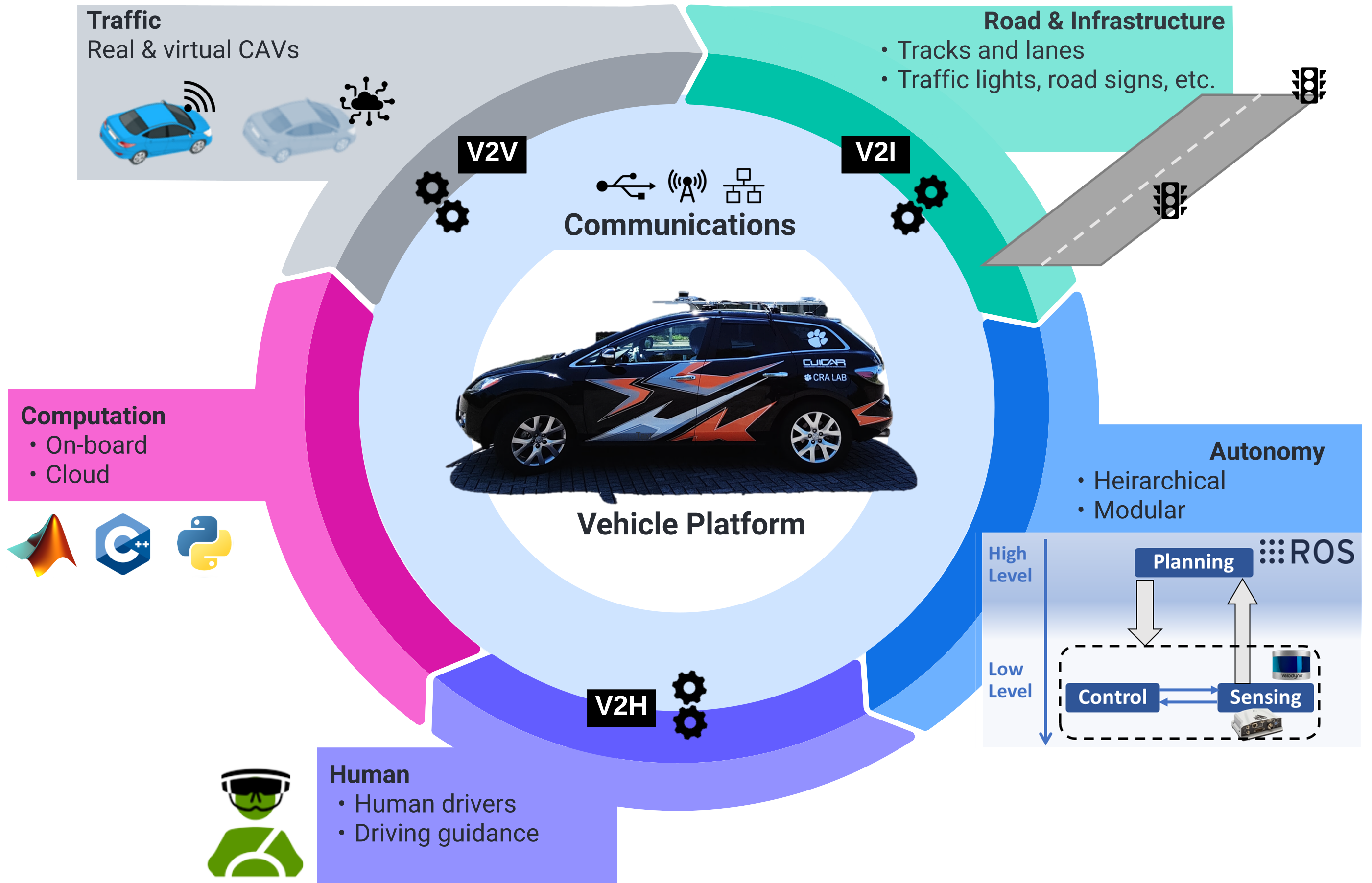
XiL setup for CAV control and planning

Key Skills & Experience

Robotics & Autonomy
Learning for Controls Optimal Controls Vehicle Autonomy Reinforcement Learning Sim2Real
System & Deployment
HiL / ViL Drive-by-Wire Systems Integration Real-Time systems
Tools & Platforms
ROS, ROS2 Linux C++ / Python Pytorch Git Simulink / MATLAB

Selected Projects

Learning Augmented Model-Based Optimization Controls (2022-2026)

Problem statement: Off-road autonomy missions face many unknown terrains and dynamics where nominal models for mobility controls do not suffice. Can we utilize reinforcement learning to enable fast adaptation of MPC and life-long learning for performant vehicle controls?

Approach: Vision informed residual learning

  • Reducing data dependency by leveraging nominal models and increasing generalization of the controller across different driving conditions
  • Formulating and investigating hybrid reinforcement learning control architecture to handle modeling mismatches and unmodeled system dynamics
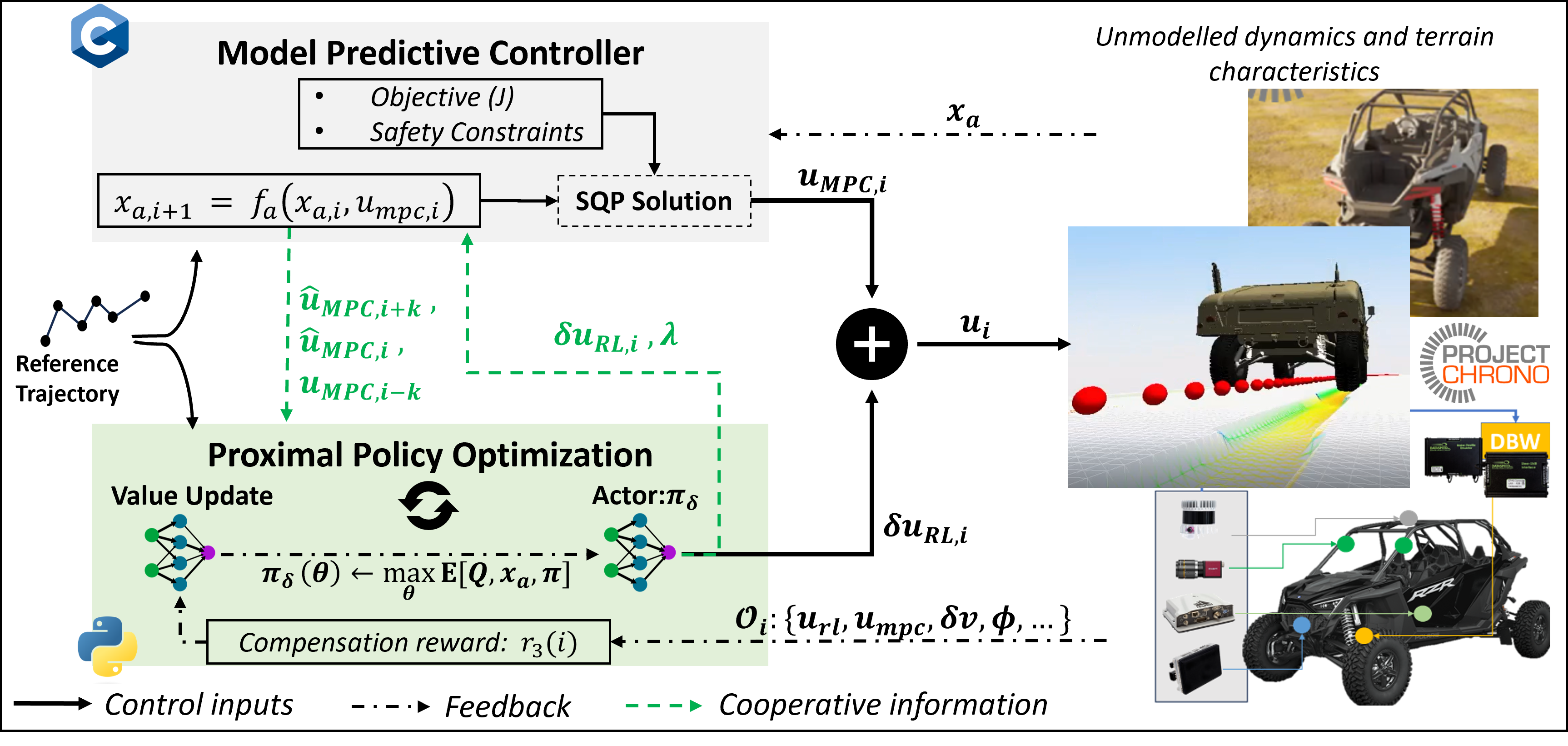
    Actor-Critic Cooperative Compensation to MPC
  • The results show that learning augmented controls not only outperform model based (MPC) a purely learnt (AC) controllers across previously unseen scenarios, but also improve smoothness of control.
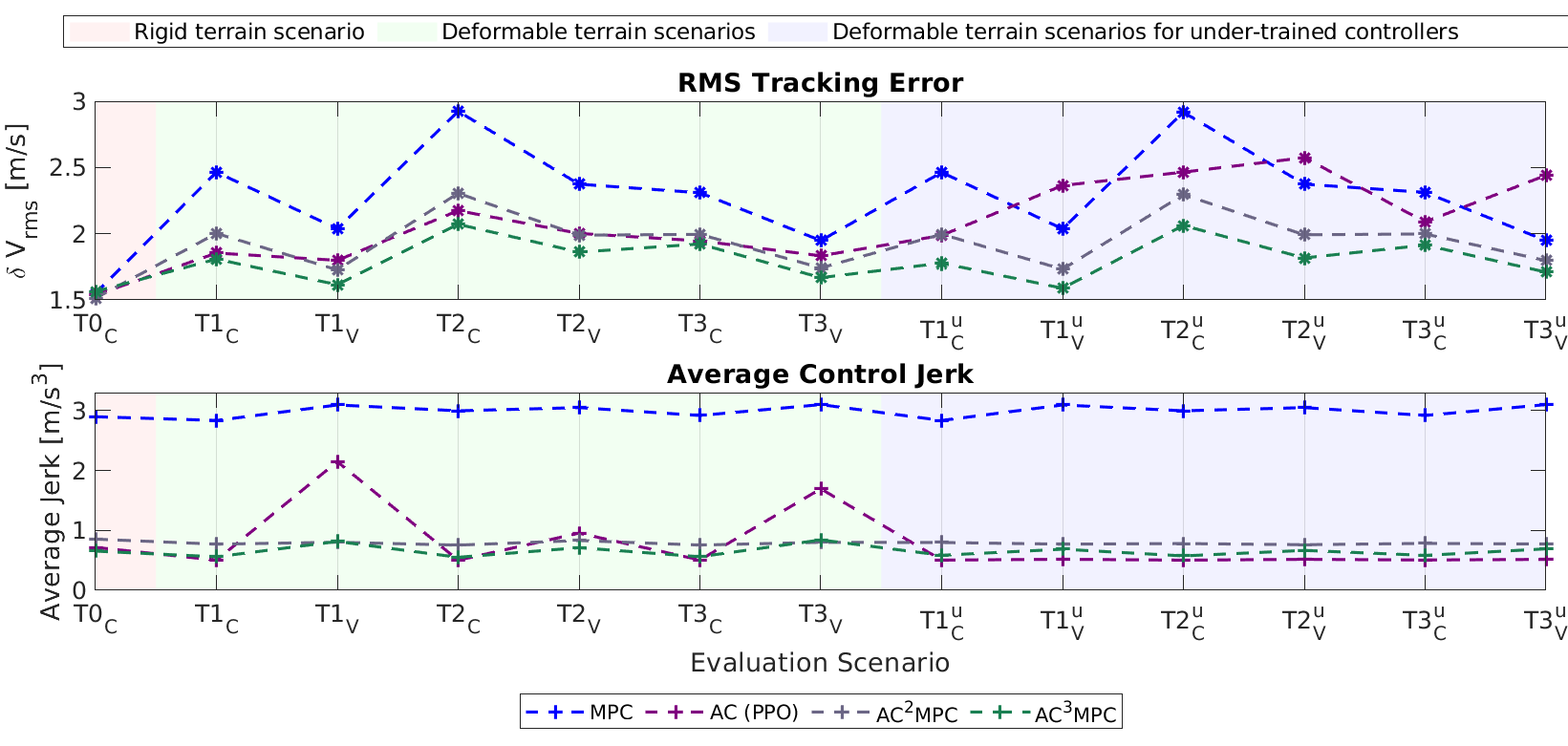
    Statistics for AC3MPC
  • Using vision foundation models to inform offline and online life-long learning for adaptation to tasks and terrains
  • Validating in simulation and on a drive-by-wire Polaris RZR vehicle on off-road terrains
Energy Efficient Cooperative Autonomous Driving (2022-2024)

Problem statement: How can we improve energy efficiency for urban driving corridors using V2X?

Approach: Constrianed optimal control.

  • Research aimed to improve energy efficiency through V2V, V2I connectivity by informing lane switching and acceleration strategy on connected traffic corridors
  • Experimental results on an in-house drive-by-wire Mazda CX7 showed up to 36% improvements
  • Expert skills for on-vehicle control deployment using real-time solvable MPC with efficient vehicle model and other state-of-the-art controllers
    XiL setup for CAV control and planning
  • Collaborators: This work was led by many researchers including Jihun Han, Tyler Ard, Tony Wang

Physics Conditioned GAN for Video Frame Prediction

Problem statement: How can physics constraints improve generative predictions for urban autonomous driving?

Approach: Physics conditioned GAN.

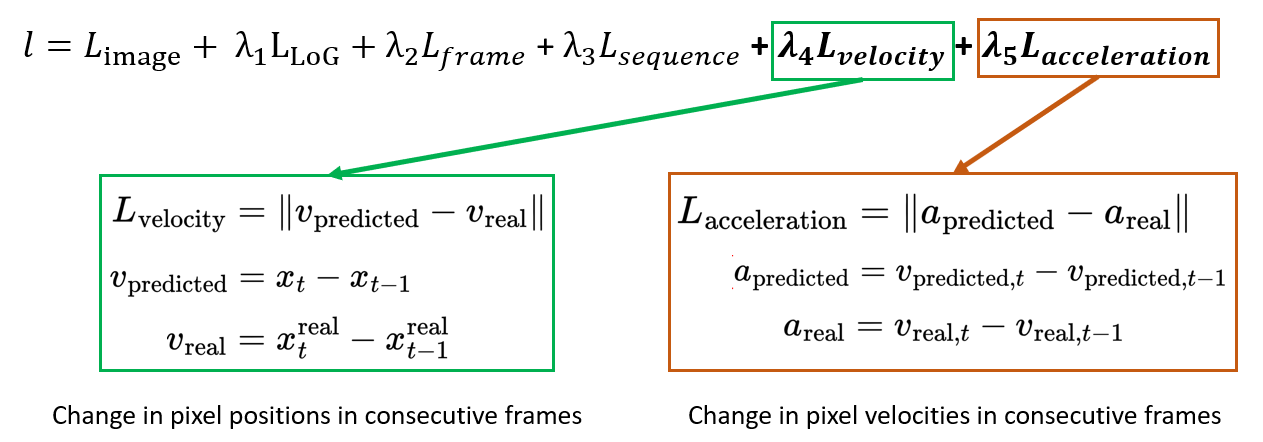
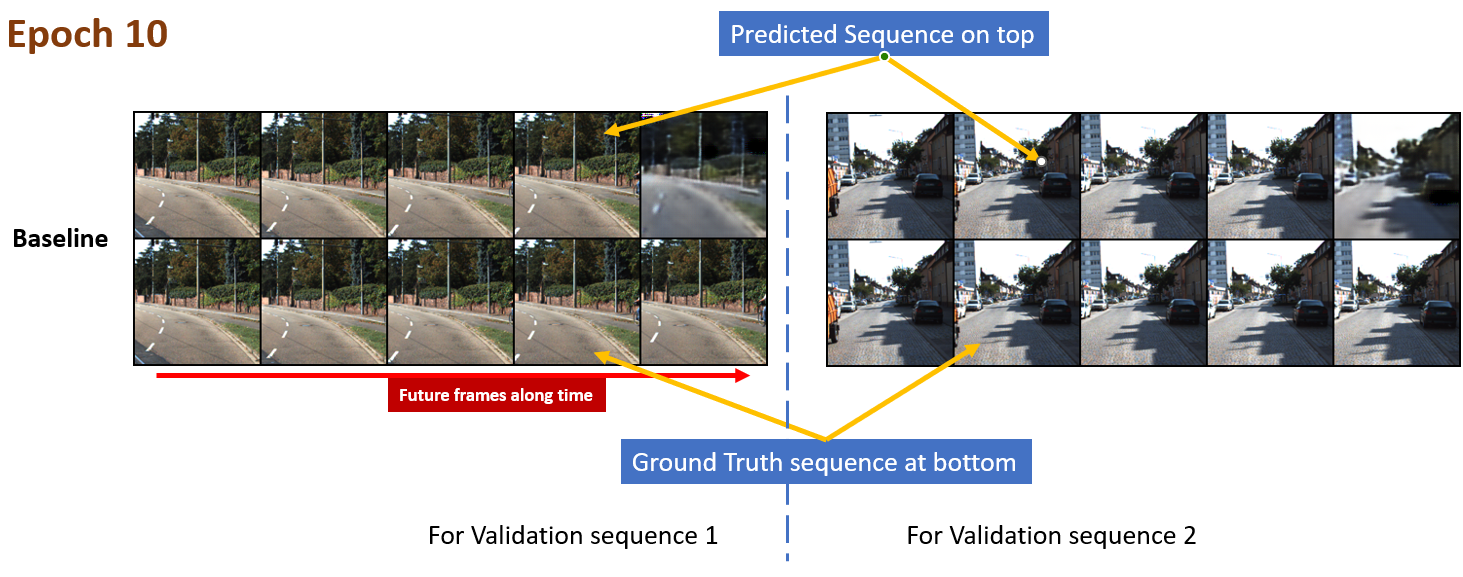
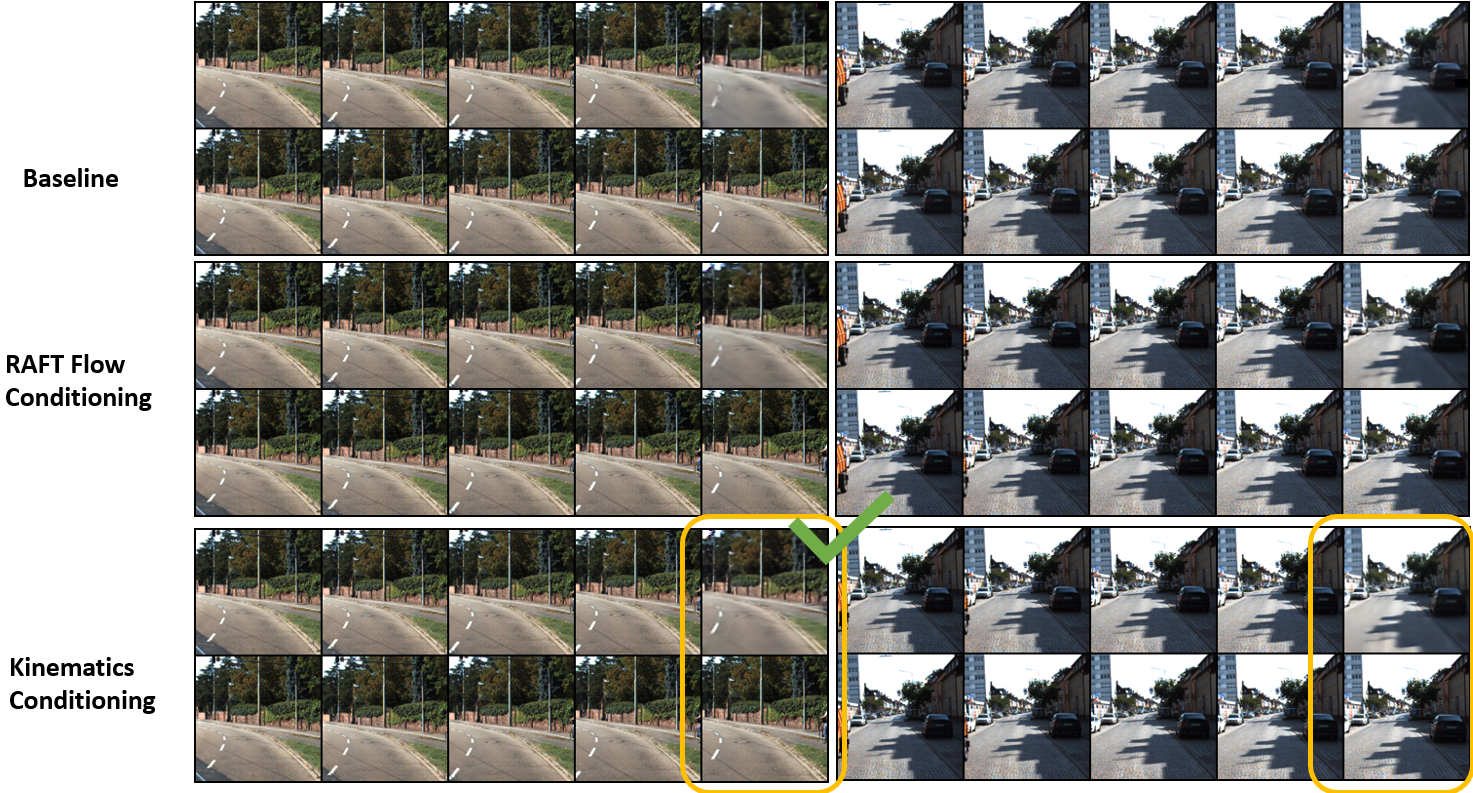
We build upon the ideas from Retrospective Cycle GAN (Kwon et al). They established great performance compared to the SOTA with their forward and backward temporal consistency idea for training the generator. However, they do not consider any conditioning on physics or restrict the movement of pixels explicitly. We ask the following question: "Can we improve blurring in longer term predictions through the use of physics constraints?"

Future Video Frame Prediction performance with conditional Generative Adversarial Network (GAN) is shown below. More details can be found on the project webpage

Tools used: PyTorch, sklearn etc.

    Architecture of the project
    Architecture of the project

Deep Orange 13 (2021-2022)

  • Utilized systems engineering principles to arrive at engineering requirements for mission critical needs.
  • Implemented fully autonomous navigation for off-road driving using cameras, lidars, GNSS over ROS (Robot Operating Software) on small and full-scale platforms
  • Designed and developed in-house Drive-by-Wire vehicle controls architecture using New Eagle Raptor controller and ROS with C++ and Python
  • Model based control and logic development in MATLAB/Simulink for embedded deployment on-board
  • H-i-L and S-i-L testing for vehicle controls
  • Communications and vehicle networking using CAN, Ethernet, wireless short-range communications
  • Autonomous Driving:
  • Manned Autonomous:

Fellowships and Awards

Year Award
2024 Best Paper Award, TRB Road User Measurement and Evaluation Committee, 103rd TRB Annual Meeting
2023 2nd Place, Best Paper Award at IEEE IAVVC 2023 conference
2021 First prize for research poster in Centre for Connected Multimodal Mobility Annual Conference 2021
2020 Received TATA Fellowship (100% tuition grant) to pursue MS Automotive Engg. at CU-ICAR
2019 Won Team Impact Award at Daimler for rapid and efficient development projects in CAE
2016 Overall 2nd place, Formula Bharat 2015 (national student competition) – winners in 7 categories
2016 National record for best acceleration timing of an FSAE race-car in 2015